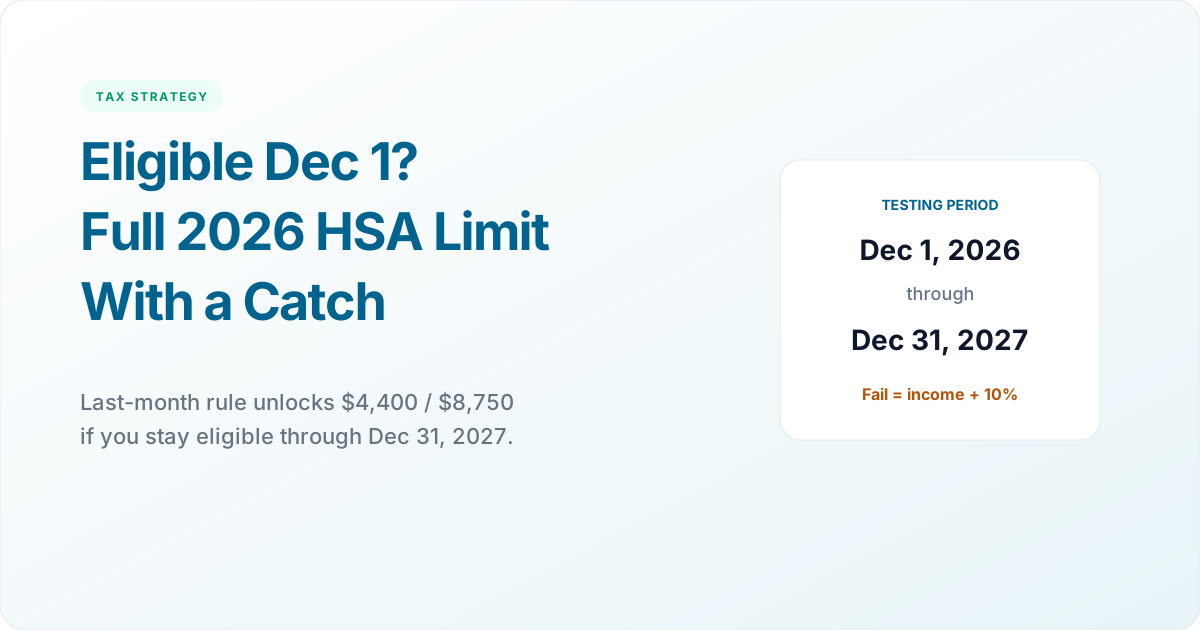
If you only had a high deductible health plan (HDHP) for part of 2026, your default HSA contribution limit is usually prorated by eligible months. The last-month rule is the exception: if you are an eligible individual on December 1, 2026, the IRS generally treats you as eligible for the entire year and lets you use the full annual limit - but only if you remain eligible through the testing period that ends December 31, 2027.
This guide is for mid-year job changes, late open-enrollment switches, and anyone deciding whether to fund the full 2026 HSA contribution limits before the April 15, 2027 deadline. It is not a redo of Form 8889 line-by-line instructions or the full Medicare Part A eligibility deep dive - those get short callouts and links.
Two Paths, One Choice
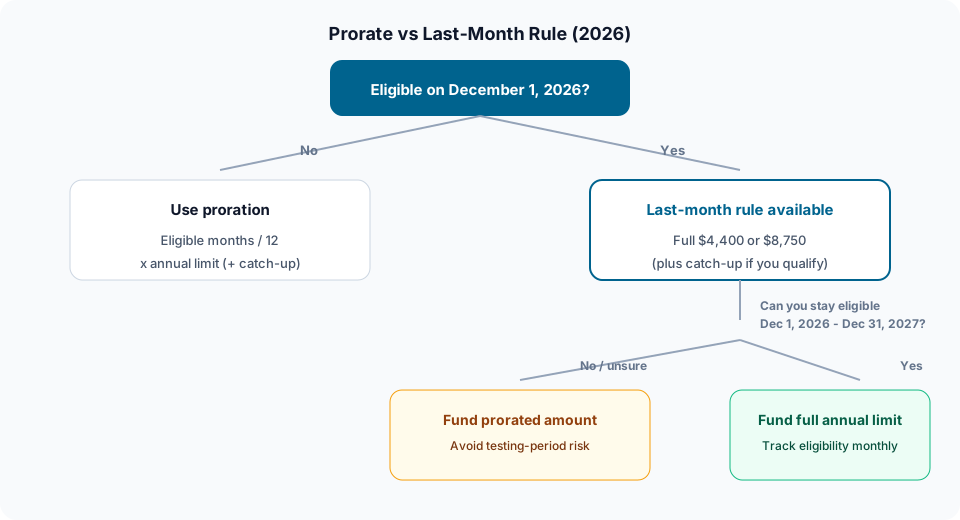
- Prorate: Eligible months / 12 x annual limit (plus catch-up if you qualify). Safer if your coverage may drop in 2027.
- Last-month rule: Eligible on December 1, 2026 means the full annual limit for your coverage type on that day - if you stay eligible December 1, 2026 through December 31, 2027.
- Fail the testing period (other than death or disability) and you include the "extra" contributions in income for the failure year plus an additional 10% tax on Form 8889 Part III.
2026 Numbers You Need First
Before you choose a path, lock the annual ceilings (employer contributions count toward these limits):
| Coverage Type | 2026 Limit |
|---|---|
| Self-only coverage | $4,400 |
| Family coverage | $8,750 |
| Catch-up contribution (age 55+) | +$1,000 |
Source: IRS Revenue Procedure. Limits include employer contributions.
- Self-only HDHP: $4,400 ( $5,400 with age-55+ catch-up)
- Family HDHP: $8,750 ( $9,750 with catch-up into your HSA only)
For 2027 planning while you are still in a testing period, Rev. Proc. 2026-24 raises the annual limits to $4,500 self / $9,000 family. Catch-up stays $1,000 by statute. Confirm your HDHP still qualifies under the 2027 deductible and out-of-pocket thresholds when open enrollment arrives.
Use the eligibility checker if you are unsure whether other coverage (FSA, HRA, Medicare) blocks eligibility for a given month.
How Standard Proration Works
You are generally an eligible individual for a month if you meet the HSA rules on the first day of that month (HDHP coverage, no disqualifying other coverage, not enrolled in Medicare, and not claimable as a dependent). Pub. 969 and the Form 8889 Line 3 Limitation Chart prorate by those months.
Example - self-only, start June 1, 2026, age 40
- Eligible months: June through December = 7
- Monthly slice: $4,400 / 12 = $366.67
- Prorated limit: 7 x $366.67 = $2,566.67 (round per Form 8889 worksheet)
Example - family coverage, job change July 1, age 57
- Annual ceiling before proration: $8,750 + $1,000 catch-up = $9,750
- Eligible months: July through December = 6
- Prorated limit: 6 x ($9,750 / 12) = $4,875
If you front-load early and later lose eligibility, the overage becomes an excess contribution problem (often the 6% Form 5329 track) - different from the last-month testing-period 10% rule below.
What the Last-Month Rule Actually Does
Under the last-month rule in Pub. 969:
December 1 gate
If you are an eligible individual on the first day of the last month of your tax year (December 1 for calendar-year filers), you are treated as an eligible individual for the entire year.
Coverage type locks to December 1
You are generally treated as having the same HDHP coverage type (self-only or family) for the whole year as you had on December 1.
Full annual limit (with a mortgage)
That lets you contribute up to the full annual limit for that coverage type (plus catch-up if you qualify), even if you only became eligible late in the year - subject to the testing period.
Example - family HDHP starts December 1, 2026, age 45
- Without the rule: one month means about $8,750 / 12, or roughly $729.
- With the rule (and a clean testing period): up to the full $8,750 for 2026.
You can still make designated 2026 contributions through the tax filing deadline (generally April 15, 2027, including employer contributions allocated to 2026 when the custodian and W-2 are notified correctly).
Establishing the HSA Still Matters for Expenses
Even if the last-month rule treats you as eligible all year for contributions, qualified medical expenses generally must be incurred after the HSA is actually established under state law. Do not assume December eligibility retroactively makes January doctor bills HSA-qualified.
The Testing Period: December 1, 2026 Through December 31, 2027
If you rely on the last-month rule to contribute more than your prorated entitlement, you must remain an eligible individual during the testing period. For last-month contributions tied to December 1, 2026, that window runs December 1, 2026 through December 31, 2027.
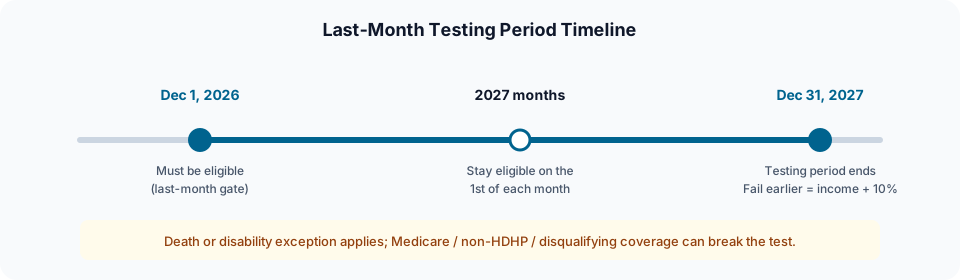
If you fail to remain eligible during that period for a reason other than death or becoming disabled, Pub. 969 and Form 8889 Part III require you to:
- Include in income the contributions that would not have been allowed without the last-month rule, and
- Pay an additional 10% tax on that amount,
in the tax year you fail the test (for example, if you lose eligibility in June 2027, the income and 10% hit belong on your 2027 return).
Simplified failure math (self-only, age under 55)
- You contribute the full $4,400 for 2026 under the last-month rule.
- Without the rule you would have been limited to December only: $4,400 / 12, or about $366.67.
- Extra amount subject to inclusion + 10%: about $4,033.33.
Use the Form 8889 instructions worksheet for the exact figure - do not invent a round number on your return.
10% Testing-Period Tax Is Not the 6% Excess Contribution Tax
Failing the last-month testing period is not the same as the recurring 6% excise tax on excess contributions left in the account (Form 5329). Mixing those rules is one of the most common mid-year HSA mistakes in online tax threads.
Who Should Skip the Last-Month Rule
Skip (or keep contributions at the prorated amount) if any of these are likely before December 31, 2027:
- Medicare enrollment in 2027 (including Part A only, premium-free Part A, or Social Security-triggered Part A). See Medicare Part A and HSA eligibility.
- A planned switch to a non-HDHP (classic PPO/HMO) in 2027 open enrollment.
- Unstable benefits after a layoff, contractor gap, or spouse's plan that would cover you with disqualifying other coverage.
- You cannot reliably track whether you stay eligible on the first day of every month through the testing period.
If you already left HDHP coverage but still have an HSA balance, see what happens when you leave your HDHP - you can often keep and spend the account even when you can no longer contribute.
Catch-Up Contributions and Married Couples
Age 55+ catch-up ($1,000) still follows the usual rules: it belongs in your HSA, not your spouse's. If both spouses are 55+ and eligible, each needs their own HSA for two catch-ups. See HSA catch-up contributions after 55.
For spouses with family HDHP coverage, the family limit is shared and can be split by agreement, but last-month eligibility is still tested per person. One spouse's Medicare start can change who may contribute and which limit applies - model that before you max the household.
Form 8889 Touchpoints (High Level)
- Part I - contributions and the Line 3 limitation / last-month election mechanics.
- Part III - income inclusion and 10% additional tax if you fail the testing period (or certain qualified HSA funding distribution tests).
For line-by-line filing help, use the existing Form 8889 guide and current-year Form 8889 instructions. Do not rely on a blog worksheet alone when Part III applies.
Frequently Asked Questions
Bottom Line
For 2026, mid-year HDHP coverage usually means a prorated HSA limit. The last-month rule is the legal shortcut to the full $4,400 / $8,750 ceiling (plus catch-up if you qualify) when you are eligible on December 1, 2026 - but it mortgages the next thirteen months. If you cannot confidently stay HSA-eligible through December 31, 2027, fund the prorated amount and sleep better.
Primary IRS sources: Publication 969 (last-month rule and testing period); Instructions for Form 8889 (Part III); Rev. Proc. 2025-19 (2026 limits); Rev. Proc. 2026-24 (2027 limits).
Written by
Michael is a Certified Public Accountant and IRS Enrolled Agent who has spent 12 years helping individuals and businesses navigate tax-advantaged health accounts. He leads HSA Orbit's tax strategy content.