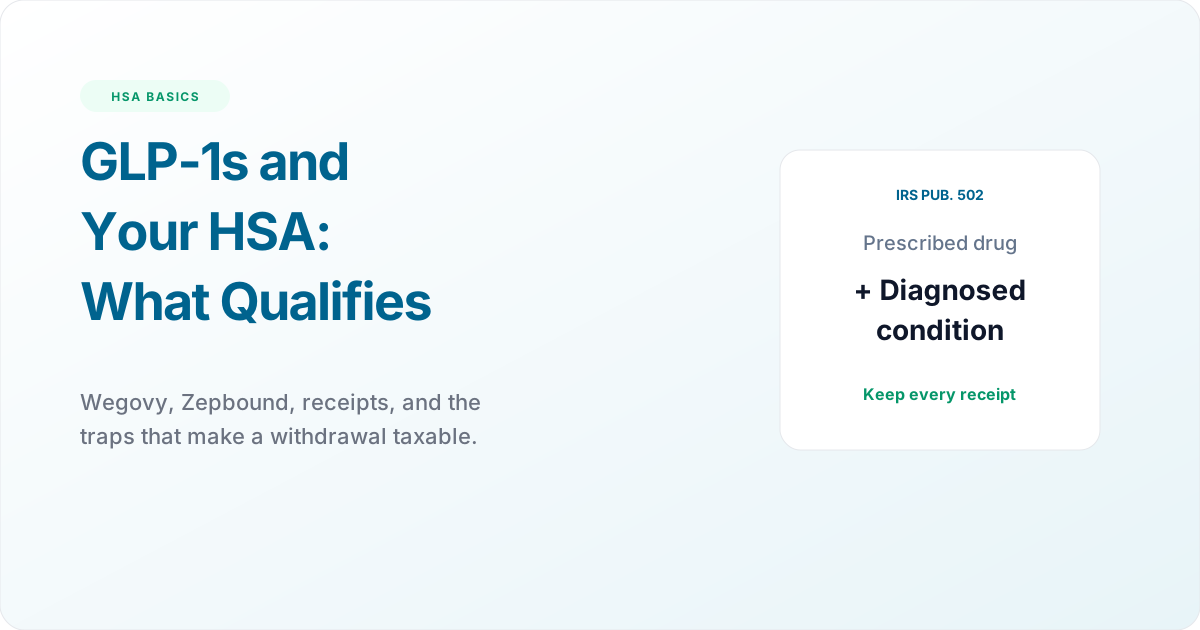
More people are paying cash for GLP-1 drugs like Wegovy and Zepbound, often because their health plan won't cover them for weight loss. So the same question keeps coming up in r/WegovyWeightLoss, r/Zepbound, and the HSA forums: "Can I use my HSA for this?" Usually yes. A GLP-1 prescribed to treat a diagnosed medical condition is a qualified medical expense. But how you buy it, what discount you use, and which records you keep decide whether the withdrawal stays tax-free. This guide covers the rules, with links to the IRS sources, and the mistakes that cause problems.
The Short Answer
- Prescribed GLP-1s count. IRS Publication 502 says you can include amounts you pay for prescribed medicines and drugs.
- The purpose has to be medical. Weight-loss costs qualify only when they treat "a specific disease diagnosed by a physician (such as obesity, hypertension, or heart disease)."
- Your insurance doesn't have to cover it. Whether something is a qualified expense depends on tax law, not your plan's formulary.
- You do the substantiating. The IRS expects you to keep records proving each withdrawal paid a qualified expense (Publication 969).
The Two IRS Rules That Make a GLP-1 HSA-Eligible
HSA money can be spent tax-free on "qualified medical expenses." Publication 969 defines these as expenses that would generally qualify for the medical and dental expense deduction, which goes back to the definition of medical care in Internal Revenue Code section 213(d). Section 223 is the code section that governs HSAs. Two parts of Publication 502 apply to GLP-1s:
- Prescribed medicines. "You can include in medical expenses amounts you pay for prescribed medicines and drugs. A prescribed drug is one that requires a prescription by a doctor for its use by an individual." Wegovy and Zepbound are prescription drugs, so the drug itself fits this category.
- Weight-loss treatment. "You can include in medical expenses amounts you pay to lose weight if it is a treatment for a specific disease diagnosed by a physician (such as obesity, hypertension, or heart disease)." The IRS repeats this in its FAQ on nutrition, wellness, and general health expenses, which says a weight-loss program can be paid from an HSA "only if the program treats a specific disease diagnosed by a physician."
Together these explain the common answer: a GLP-1 prescribed by a licensed clinician to treat a diagnosed condition is a qualified medical expense. A GLP-1 taken only for appearance or general wellness, without a diagnosis, is not.
For reference, the FDA approved Zepbound in November 2023 for chronic weight management in adults with obesity (BMI of 30 or greater), or overweight (BMI of 27 or greater) with at least one weight-related condition such as high blood pressure, type 2 diabetes, or high cholesterol. Those are the patients the drug is approved for, and they also tend to be the people whose clinician records the kind of diagnosis the IRS rule is looking for.
Good to Know
Insurance denial doesn't matter here. Many employer plans exclude GLP-1s for weight loss. That is a coverage decision. Whether the expense is HSA-qualified depends on the IRS rules above, so a self-pay prescription can still be paid from your HSA.
Step by Step: Paying for a GLP-1 With Your HSA
1. Get the prescription and diagnosis on record
Whether you see your primary care doctor or a telehealth weight-management service, make sure the visit notes include the diagnosis the prescription treats (for example obesity, or overweight with hypertension). That chart note is what links the drug to "a specific disease diagnosed by a physician."
2. Decide: pay with the HSA card, or pay now and reimburse later
You have two ways to do it:
- HSA debit card at the pharmacy or self-pay portal. This is the simplest option. Several Reddit users report the card working at pharmacies and on manufacturer self-pay sites, but card acceptance depends on the merchant and your custodian.
- Pay out of pocket, reimburse later. HSA reimbursements have no annual deadline. Publication 969 says "You don't have to make withdrawals from your HSA each year," and that you can be reimbursed for qualified expenses incurred after you establish the HSA. Some people let their HSA stay invested and reimburse themselves years later. That only works if you keep the receipts. See how long to keep HSA receipts.
The one firm limit is timing: the expense has to be incurred after your HSA was established. A prescription filled before you opened the account can't be reimbursed from it.
3. Save a documentation packet for every fill
Publication 969 requires records showing that distributions were "exclusively to pay or reimburse qualified medical expenses," that the expenses "hadn't been previously paid or reimbursed from another source," and that they "hadn't been taken as an itemized deduction in any year." You don't send these records with your return. You keep them. For each fill, save:
- The itemized receipt (drug name, date, amount you actually paid)
- The prescription record (pharmacy label or portal printout)
- The clinical note showing the diagnosis, or a letter of medical necessity (LMN) if your clinician provides one
Pro Tip
On letters of medical necessity: for an HSA, you don't submit an LMN to the IRS, and custodians usually don't review your purchases. You are responsible if you're audited. FSAs are different. FSA administrators review claims and often ask for an LMN for weight-management drugs. If you have both accounts, plan around the stricter FSA process. See HSA and FSA at the same time.
Track fills and receipts in one place with the HSA expense tracker, or check a borderline purchase first with the eligible expense checker.
4. Report it correctly at tax time
Your custodian reports withdrawals on Form 1099-SA. You report total distributions and the amount used for qualified expenses on Form 8889. The Form 8889 instructions explain each line. If your qualified expenses equal your distributions, no tax is due on them. For how the forms fit together, see 1099-SA vs 5498-SA.
Traps That Can Turn a GLP-1 Withdrawal Taxable
Reimbursing more than you actually paid
Coupons, savings cards, and manufacturer discounts lower what you pay. Only the amount you paid is a qualified expense, and Publication 969 requires that the expense wasn't "previously paid or reimbursed from another source." If a discount program covered part of the price, reimburse only your out-of-pocket share. Some manufacturer savings-card terms also restrict using HSA or FSA funds alongside the card, so read the program terms before combining them.
No diagnosis on file
If your records only show a prescription and nothing ties it to a diagnosed condition, you have a weak position in an audit, because Publication 502 limits weight-loss costs to treatment of a diagnosed disease. Ask your clinician to document the diagnosis. That costs you nothing.
Drugs imported from another country
Publication 502 says: "In general, you can't include in your medical expenses the cost of a prescribed drug brought in (or ordered and shipped) from another country. You can only include the cost of a drug that was imported legally." A cheaper GLP-1 ordered from an overseas pharmacy generally won't be a qualified expense even with a prescription.
Add-ons that aren't medicine
The IRS draws clear lines around weight-loss spending. From Publication 502:
- Diet food and beverages: not includible, because they replace what you would normally eat.
- Gym, health club, or spa dues: not includible as general membership, though separate fees for weight-loss activities can be. The IRS FAQ allows a gym membership only for the sole purpose of treating a diagnosed disease or similar medical purposes.
- Weight-reduction group fees: includible when the weight loss treats a diagnosed disease.
- Nutritional counseling: qualifies only if it treats a specific disease diagnosed by a physician, per the same FAQ.
Compounded versions
Many telehealth services sell compounded semaglutide or tirzepatide. Publication 502's medicine rule is about whether a drug is prescribed, and Reddit users report being reimbursed for compounded fills with a prescription and receipt. Keep the same documentation packet, and ask your provider to confirm the product is legally dispensed in the U.S.
What Happens If You Get It Wrong
If HSA money is used for something that isn't a qualified medical expense, Publication 969 says the amount is included in your income and "may be subject to an additional 20% tax." There is an exception: "There is no additional tax on distributions made after the date you are disabled, reach age 65, or die." After 65 a non-qualified withdrawal is still taxed as income, just without the 20% additional tax. The Form 8889 instructions cover the additional tax and its exceptions.
If you realize you reimbursed yourself too much, for example the full list price when a coupon covered part of it, contact your HSA custodian right away and ask how they handle correcting a mistaken distribution. Then fix your records before you file. For the full set of reimbursement rules, see HSA reimbursement tax rules.
How Much the HSA Saves on a GLP-1
When you pay with HSA dollars, the money you contributed went in before federal income tax. If you contributed through payroll at work, it generally also skipped Social Security and Medicare taxes. Your savings equal your marginal rate on the dollars you spend. The triple tax advantage guide walks through the math.
The amount you can put in limits how much you can run through the account in a year. For 2026, HSA contributions are capped at $4,400 self-only and $8,750 family (Rev. Proc. 2025-19). For 2027 the caps are $4,500 and $9,000 (Rev. Proc. 2026-24), plus a $1,000 catch-up at age 55 or older. Employer contributions count toward these limits. If you're planning a year of self-pay prescriptions, use the contribution calculator to set your payroll election during open enrollment. See HSA contribution limits for 2027 for the details.
Important
State tax caveat: California and New Jersey tax HSA contributions at the state level, so the savings there are federal only. See the California HSA tax guide and the New Jersey HSA tax guide.
Spouses and Dependents
Publication 969 says qualified medical expenses include those of you and your spouse and all dependents you claim on your tax return. A GLP-1 prescribed to your spouse to treat a diagnosed condition can be paid from your HSA under the same rules, even if your spouse isn't on your health plan. Keep the same documentation in their name.
GLP-1 HSA Checklist
Frequently Asked Questions
Bottom Line
A GLP-1 prescribed to treat a diagnosed condition is a qualified HSA expense under Publication 502, whether or not your insurance covers it. To keep the withdrawal tax-free, have the diagnosis on record, reimburse only what you actually paid, avoid overseas pharmacies, and save the receipt and prescription for every fill. If you expect a year of self-pay fills, set your 2027 HSA contribution during open enrollment so you have the money in the account.
Primary sources: IRS Publication 502; IRS Publication 969; IRS FAQ on nutrition, wellness, and general health; Form 8889 instructions; 26 U.S.C. 213; 26 U.S.C. 223; Rev. Proc. 2025-19; Rev. Proc. 2026-24; FDA Zepbound approval.
Written by
Michael is a Certified Public Accountant and IRS Enrolled Agent who has spent 12 years helping individuals and businesses navigate tax-advantaged health accounts. He leads HSA Orbit's tax strategy content.