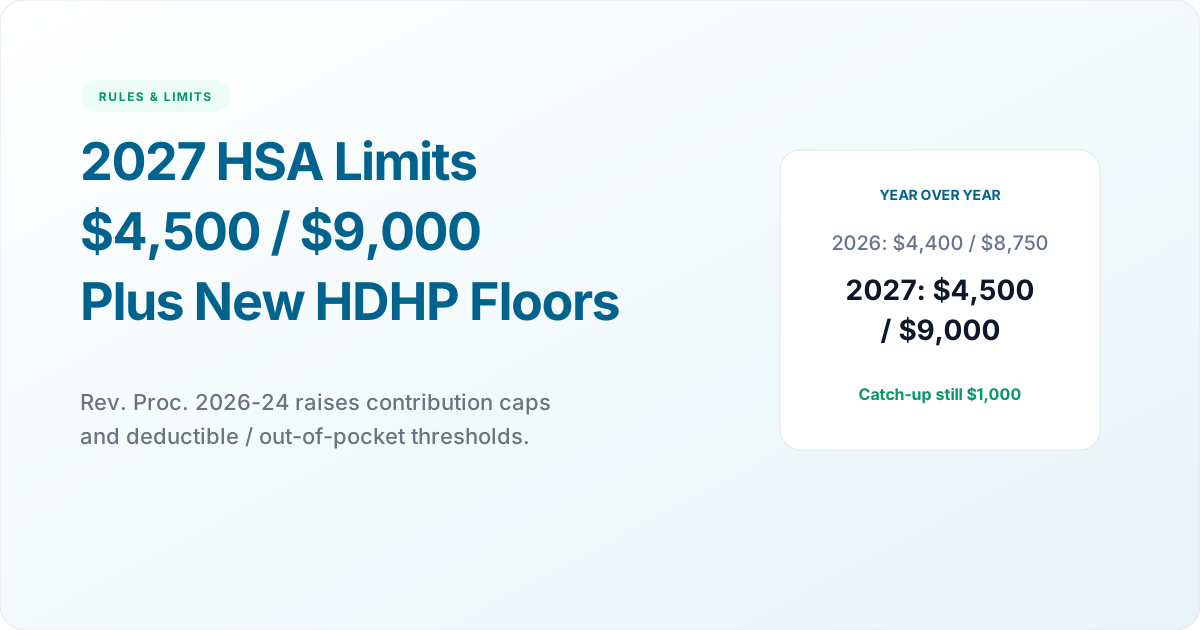
In Rev. Proc. 2026-24, the IRS published the inflation-adjusted Health Savings Account contribution limits and high deductible health plan (HDHP) thresholds for calendar year 2027. Self-only coverage rises to $4,500 and family coverage to $9,000. If you already know the 2026 HSA contribution limits, this guide is the year-over-year update you need for fall open enrollment and for anyone still deciding how hard to fund 2026 before the April 15, 2027 deadline.
This page pairs with the HSA last-month rule for 2026 if you became eligible mid-year, and with Bronze and Catastrophic HSA eligibility if your Marketplace plan relies on the OBBBA deemed-HDHP rule rather than classic deductible tests.
2027 HSA Caps at a Glance
- Self-only: $4,500 (up $100 from 2026's $4,400)
- Family: $9,000 (up $250 from 2026's $8,750)
- Age 55+ catch-up: still $1,000 (statutory; not inflation-adjusted)
- Employer contributions count toward the same annual ceiling
2026 vs 2027 Contribution Limits
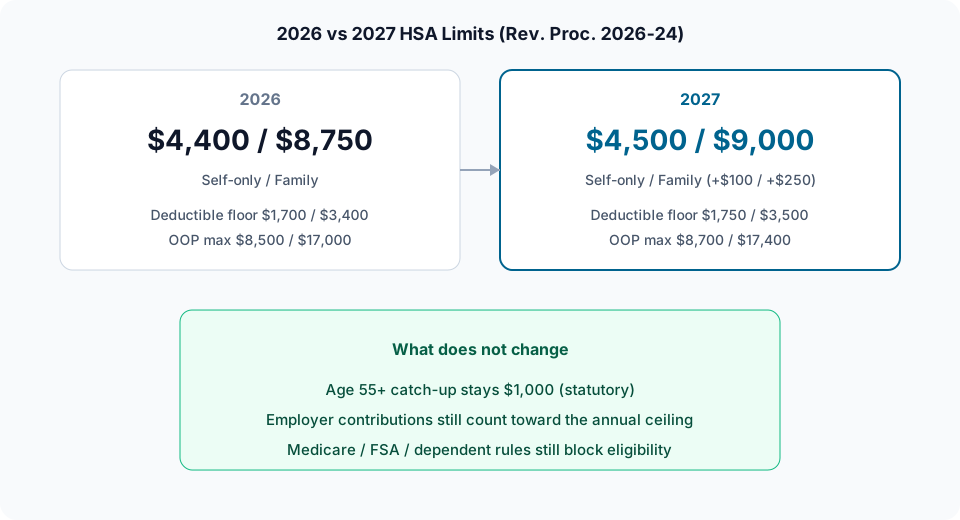
Year-over-year ceilings (employer dollars count toward these totals):
- Self-only annual limit: $4,400 in 2026 -> $4,500 in 2027 (+$100)
- Family annual limit: $8,750 in 2026 -> $9,000 in 2027 (+$250)
- Catch-up (age 55+): $1,000 in both years (unchanged)
Sources: Rev. Proc. 2025-19 (2026); Rev. Proc. 2026-24 (2027).
With catch-up, a 55+ saver can reach $5,500 self-only or $10,000 family in 2027 - but each spouse's catch-up still must go into that spouse's HSA. See HSA catch-up contributions after 55.
2027 HDHP Deductible and Out-of-Pocket Thresholds
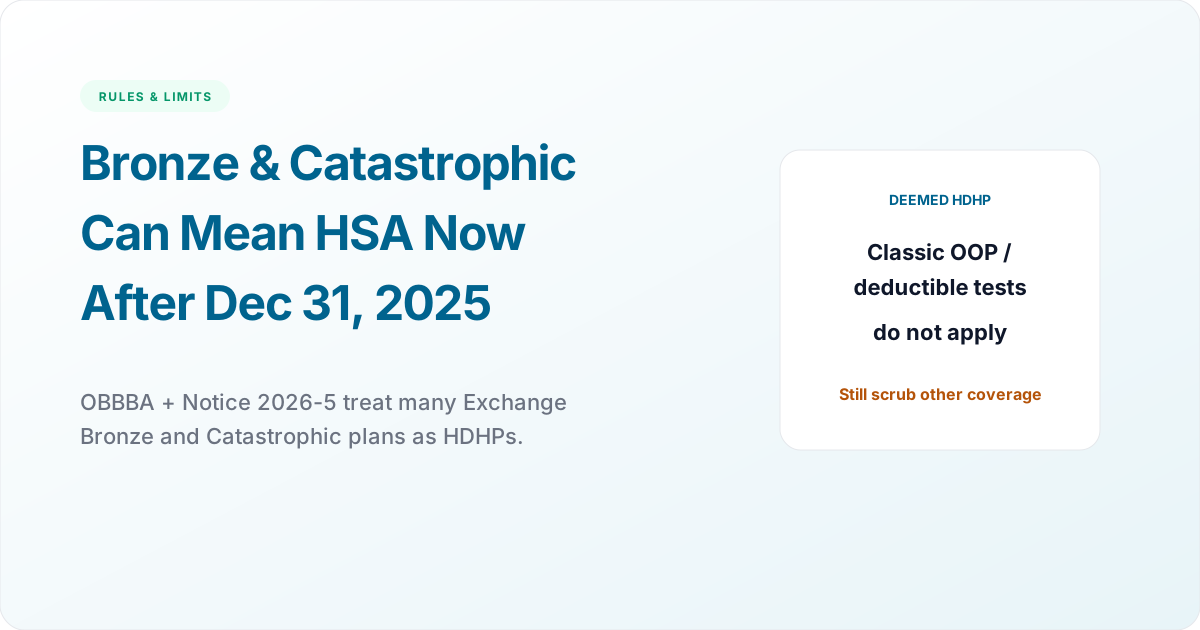
To contribute in 2027 you still need qualifying HDHP coverage (unless a special rule applies - for example, certain Bronze/Catastrophic Exchange plans treated as HDHPs under OBBBA for months after December 31, 2025; see Bronze and Catastrophic HSA eligibility).
- Minimum deductible - self-only: $1,700 in 2026 -> $1,750 in 2027
- Minimum deductible - family: $3,400 in 2026 -> $3,500 in 2027
- Maximum out-of-pocket - self-only: $8,500 in 2026 -> $8,700 in 2027
- Maximum out-of-pocket - family: $17,000 in 2026 -> $17,400 in 2027
Confirm your employer or Marketplace plan still meets both the deductible floor and the out-of-pocket ceiling for the year you want to contribute. Marketing labels like "high deductible" are not enough.
Excepted-Benefit HRA Cap (Side Note)
Rev. Proc. 2026-24 also raises the maximum amount that may be newly available for an excepted-benefit HRA for plan years beginning in 2027 to $2,250 (up from $2,200 in 2026). That is a separate employer HRA rule, not your personal HSA contribution limit - but benefits teams often update both numbers in the same open-enrollment packet.
What Still Does Not Change
- Medicare enrollment still zeros your contribution limit beginning with the first month you are enrolled (including premium-free Part A). Details: Medicare Part A and HSA eligibility.
- Mid-year eligibility is still prorated by eligible months unless you validly use the last-month rule (and survive its testing period).
- Excess contributions still face the recurring 6% excise tax if left in the account (Form 5329) - different from the 10% testing-period tax after a failed last-month election.
- You can generally contribute for a calendar year through the tax filing deadline of the following year (for 2027 contributions, that will be the April 2028 deadline once announced).
10% Testing-Period Tax Is Not the 6% Excess Tax
If you used the last-month rule to unlock a full 2026 limit, failing the Dec 1, 2026 through Dec 31, 2027 testing period can trigger income inclusion plus a 10% additional tax. That is separate from the recurring 6% excise tax on excess contributions left in the account. Do not mix the two tracks on Form 8889 / Form 5329.
Open-Enrollment Planning Moves
Re-check the 2027 HDHP badge
Match your plan's deductible and out-of-pocket numbers to the 2027 floors and ceilings above - or confirm Bronze/Catastrophic Exchange deeming under Notice 2026-5.
Include employer seed or match
Employer contributions count toward the same $4,500 / $9,000 ceiling before you set payroll deferrals.
Finish 2026 funding first
If you still have room under $4,400 / $8,750, the deadline is generally April 15, 2027. Tell payroll and your custodian which tax year the dollars belong to.
Run household math, not just the family headline
Two self-only HDHPs for spouses can still beat one family limit in some years. Model both paths.
Prefer payroll when available
Payroll HSA deferrals can avoid FICA as well as income tax - a quieter win than a year-end lump sum.
Use the eligibility checker once your 2027 elections are set.
Frequently Asked Questions
Bottom Line
For 2027, plan around $4,500 self-only and $9,000 family, plus $1,000 catch-up if you qualify, and verify your HDHP against the new $1,750 / $3,500 deductible floors and $8,700 / $17,400 out-of-pocket caps. Pair this page with the 2026 limits guide during open enrollment so you do not mix tax years.
Primary IRS sources: Rev. Proc. 2026-24; Rev. Proc. 2025-19; Publication 969.
Written by
David is a licensed attorney and SHRM Senior Certified Professional who covers HSA compliance, IRS regulations, and employer benefits law. He previously practiced employee benefits law at a national firm.